Our history
Past, present, and future.
In the post-war workshops, there was little room for the unnecessary. You built what was needed, in the most direct way possible.
Turin, 1946
Testadoro was not born from a grand industrial plan, but from a precise mechanical idea: a car had to be light, essential, and fast. Everything else was superfluous.
The birth of the Testadoro name
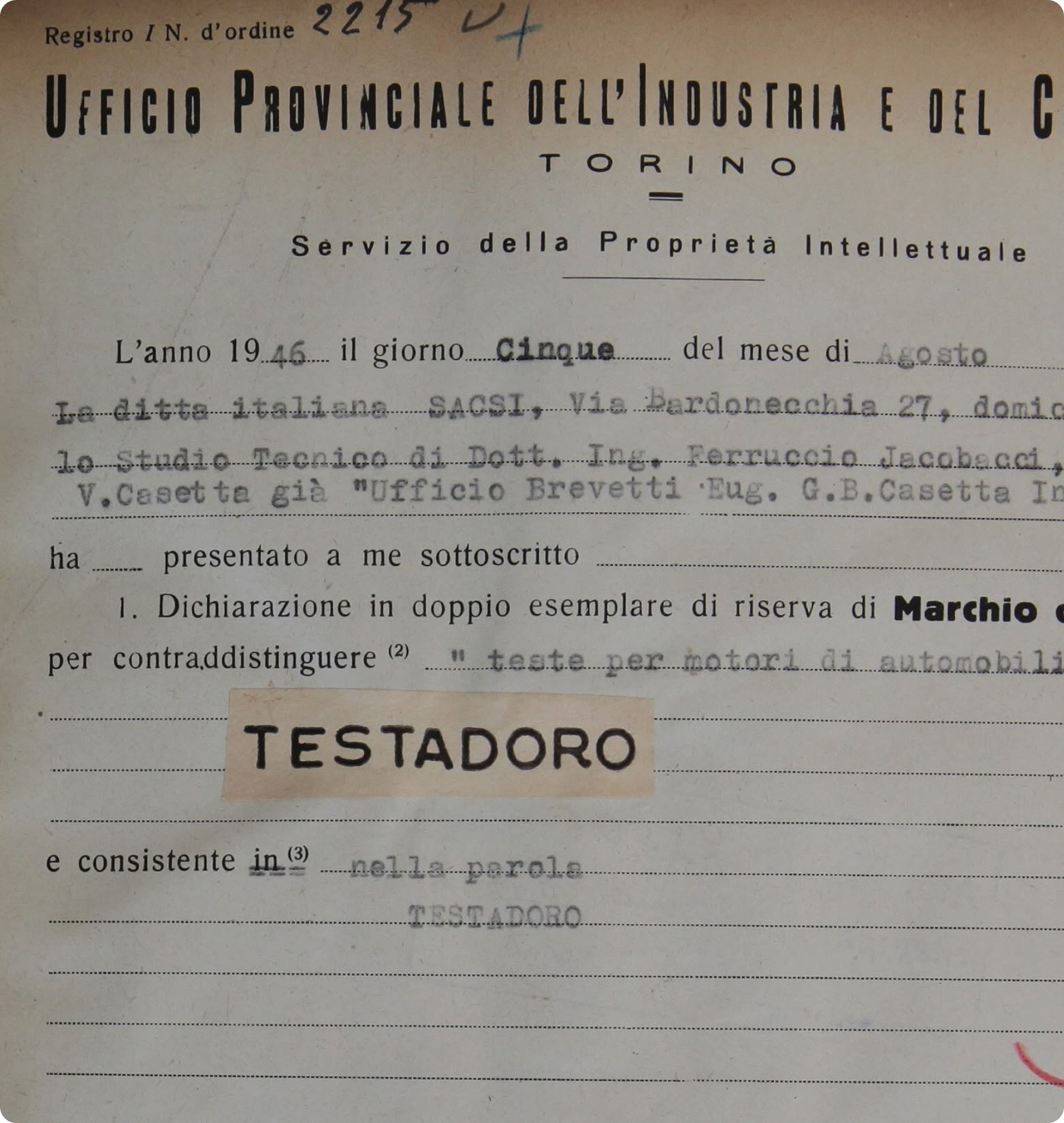
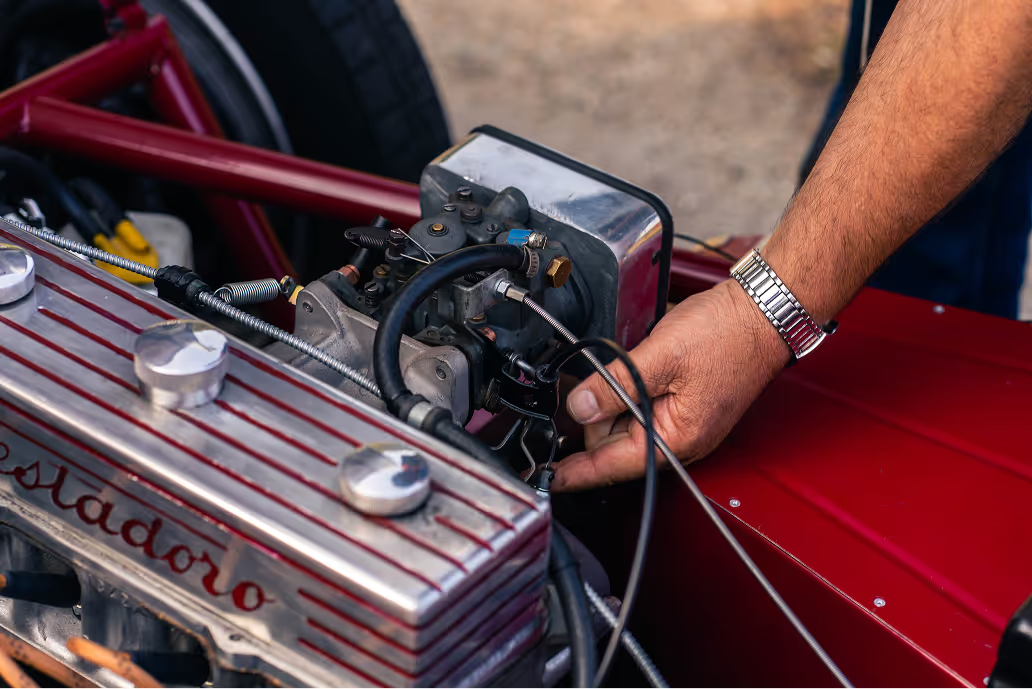
In 1946, the Testadoro brand was registered in Turin as a name to distinguish a cylinder head for car engines, designed to improve the performance of the Fiat 500 “Topolino”. The idea was born within the Casa dell’Auto, founded by Giorgio Giusti and Arnaldo Roselli, with the goal of achieving more power and lower fuel consumption. The unique bronze casting, with its gold-like color, inspired the product's name: from “Testa d’Oro” (Golden Head), came the Testadoro brand.
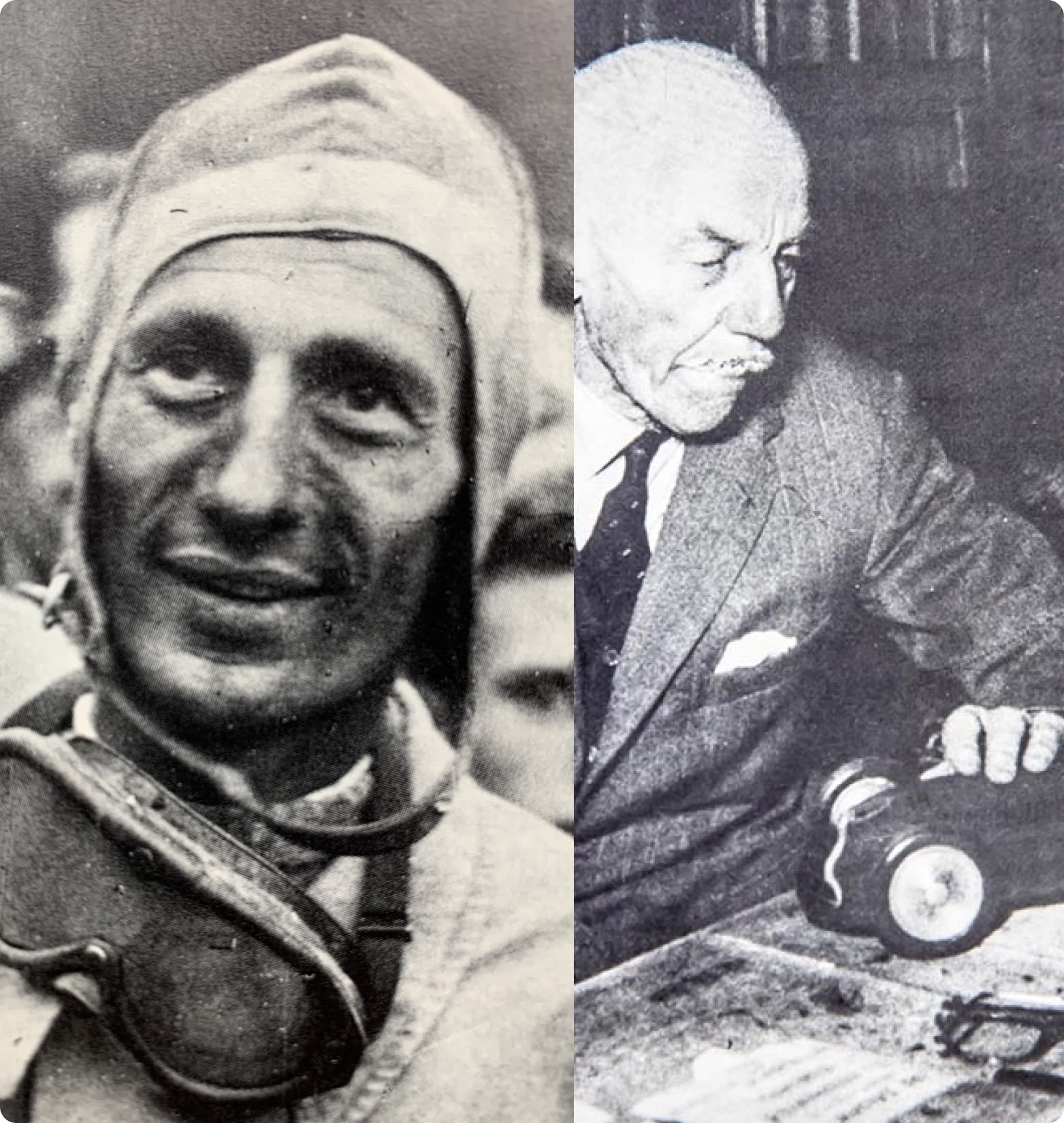
Giorgio Giusti and Carlo Biscaretti di Ruffia
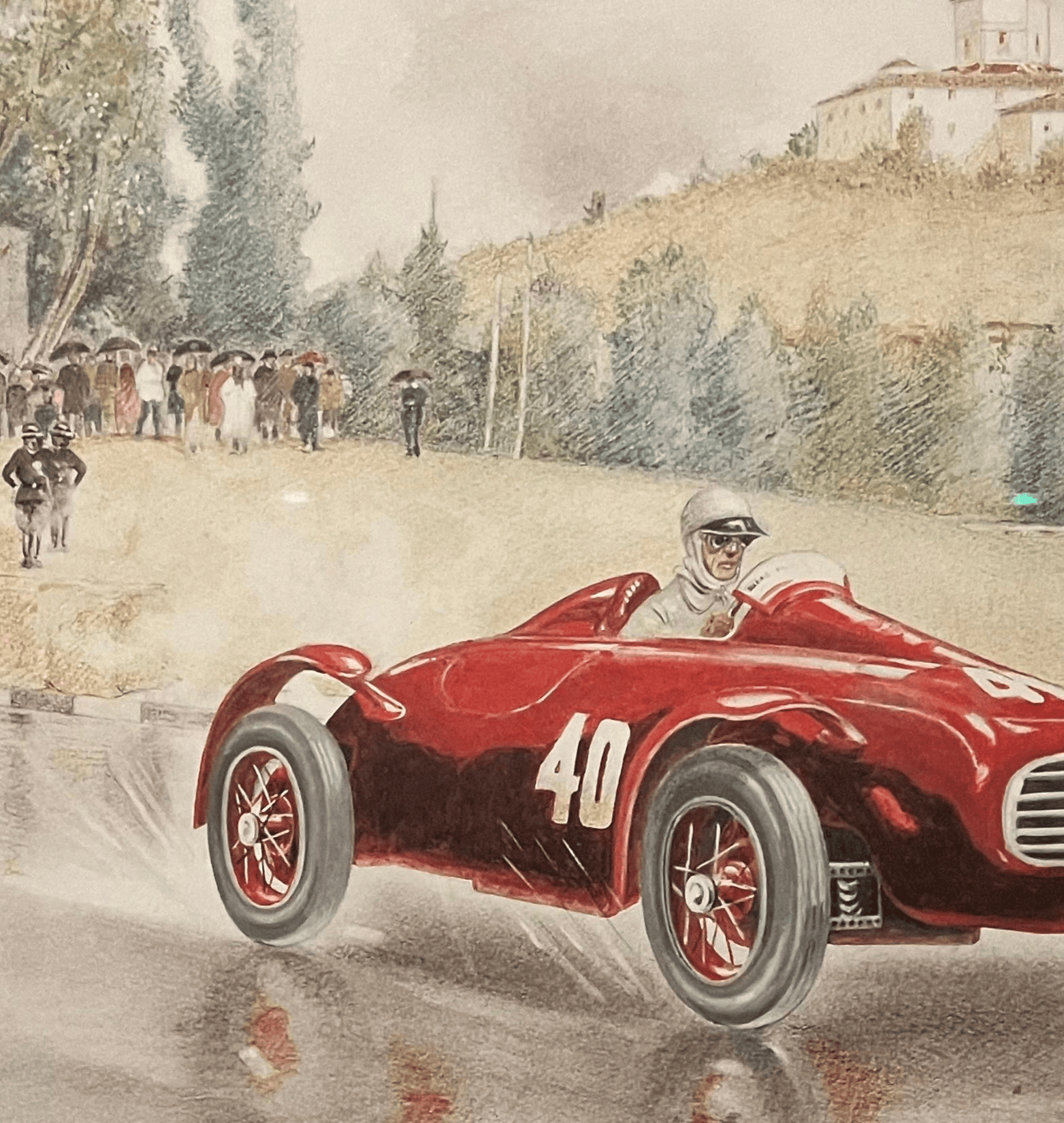
Two figures are central to the history of Testadoro: Giorgio Giusti and Carlo Biscaretti di Ruffia. Giusti was founder, builder, and driver—the technical and sporting soul of the brand, as well as a key figure in Turin's post-war automotive scene. Biscaretti di Ruffia, a painter, illustrator, and automotive historian, contributed to the project's image with advertising drawings and illustrations, even writing a famous article dedicated to the first Testadoro cylinder head. Together, they helped build not just a product, but its identity.
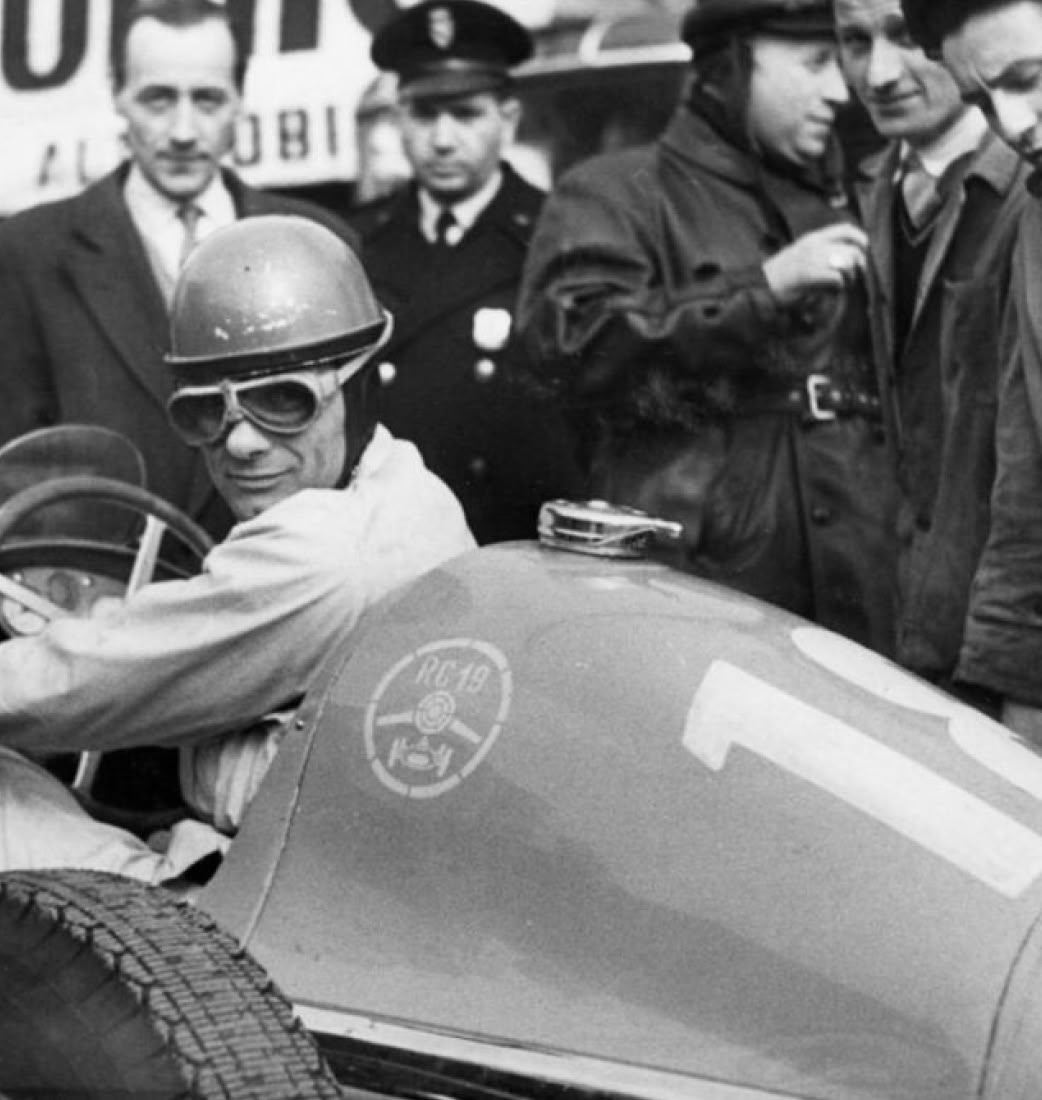
Casa dell’Auto and Racing Club 19
Testadoro came to life at Casa dell’Auto in Turin, a specialized workshop founded by Giorgio Giusti and Arnaldo Roselli. What began as a range of automotive services gradually narrowed into building and fitting the famous cylinder head. Intertwined with this experience was the Racing Club 19, an important Turin motoring club of which Giusti was a founder and the first president, frequented by great names in Piedmontese and Italian motorsport.
Mechanics
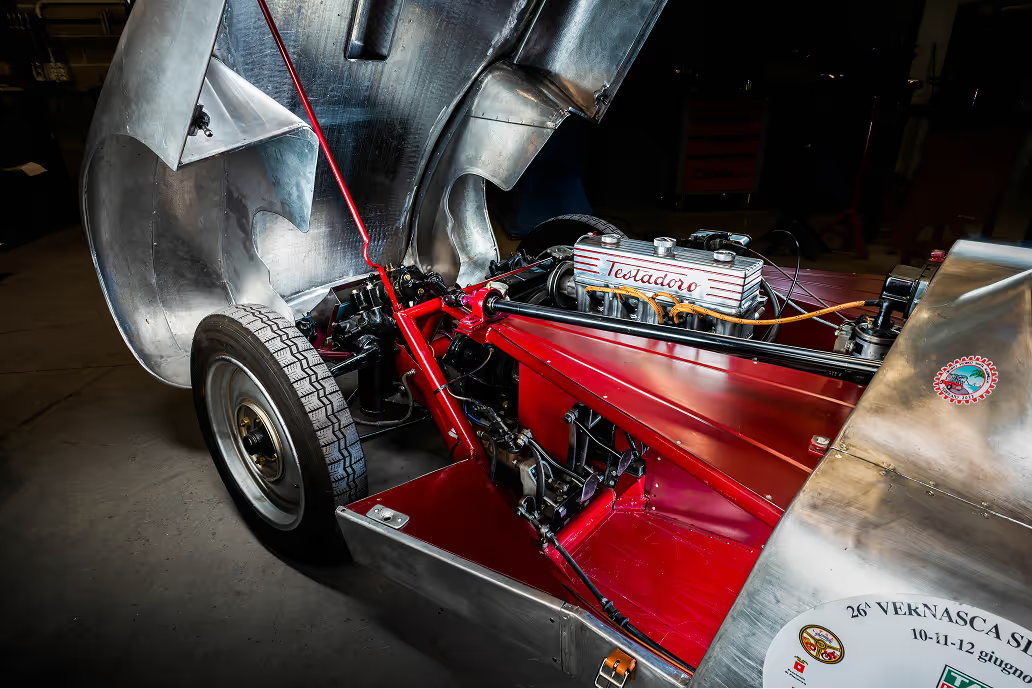
Simple, direct, accessible. Easy to understand, easy to repair. A philosophy that came before performance itself.
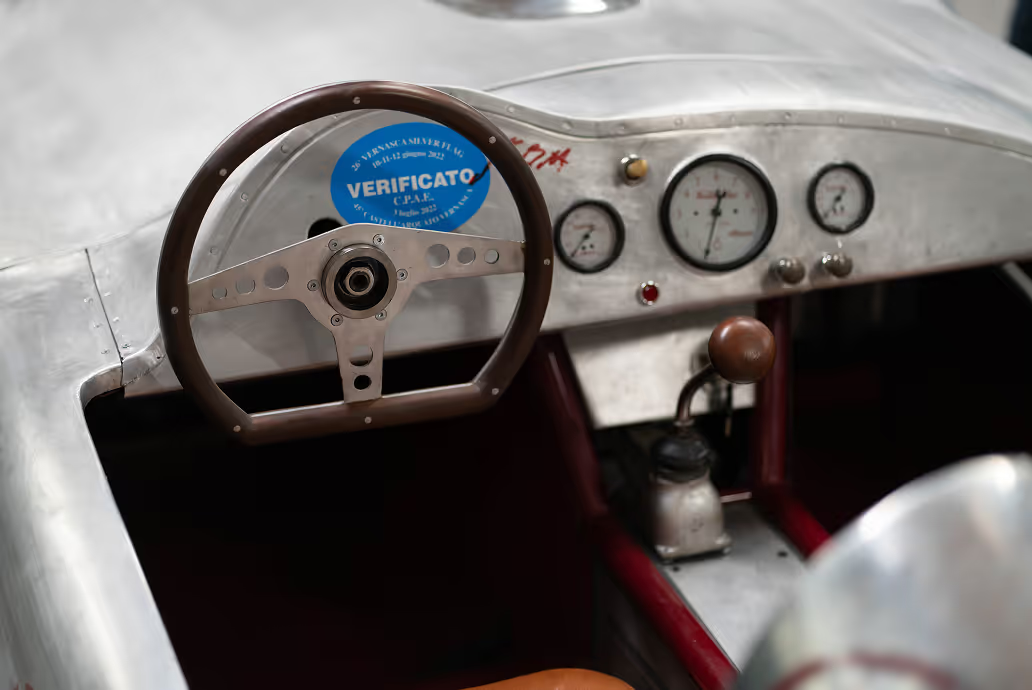
Cockpit
Essential. The driver has what is needed to drive, nothing more. The focus remains on the car, not the cockpit.
Bodywork
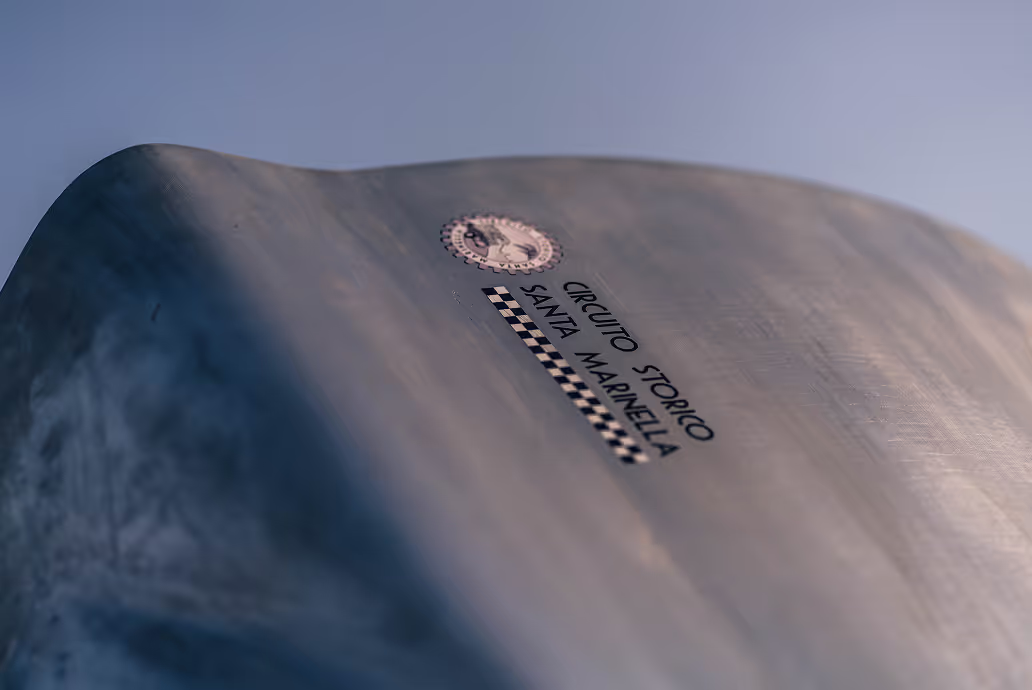
Form follows function, not the other way around. No shapes were added to look sporty; the lines are a direct result of what lies beneath.
Weight
Trimmed to the minimum in every component.  Not to set records, but to ensure the car responded immediately and predictably.
Proportions
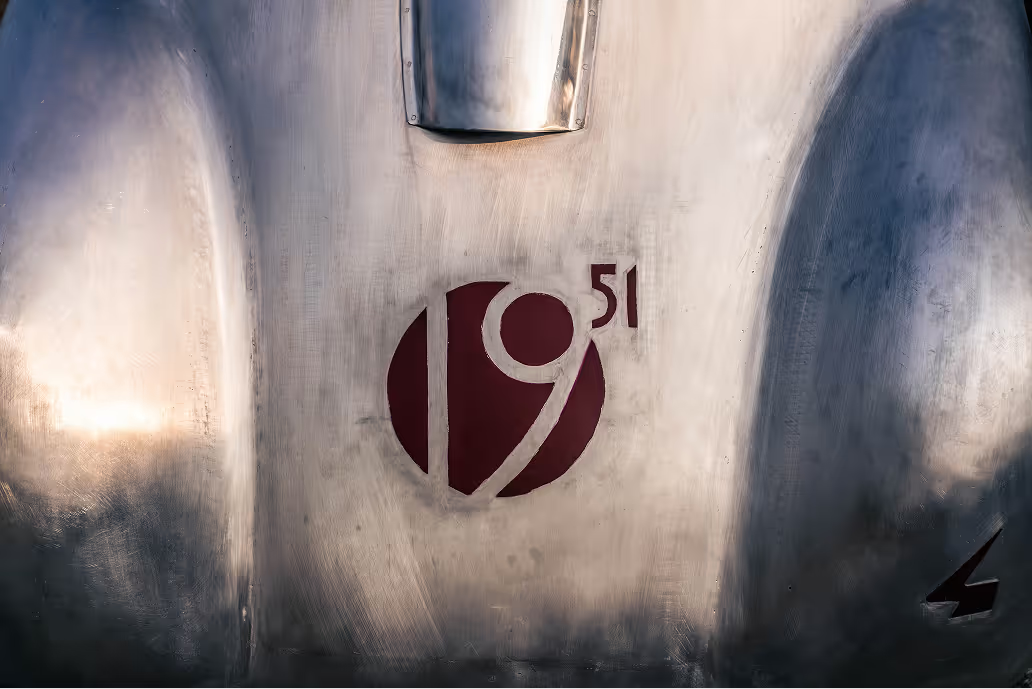
Every measurement has a mechanical reason. Visual balance is a consequence of technical balance.
Essential
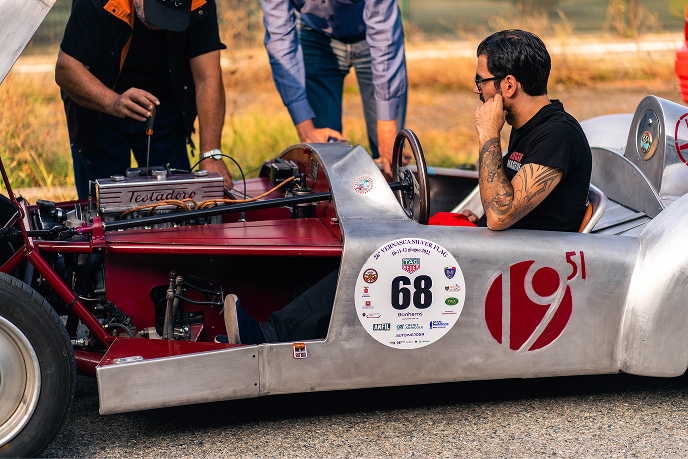
The driver has what is needed to drive, nothing more. The focus remains on the car, not on excess.
1946, the Golden Head
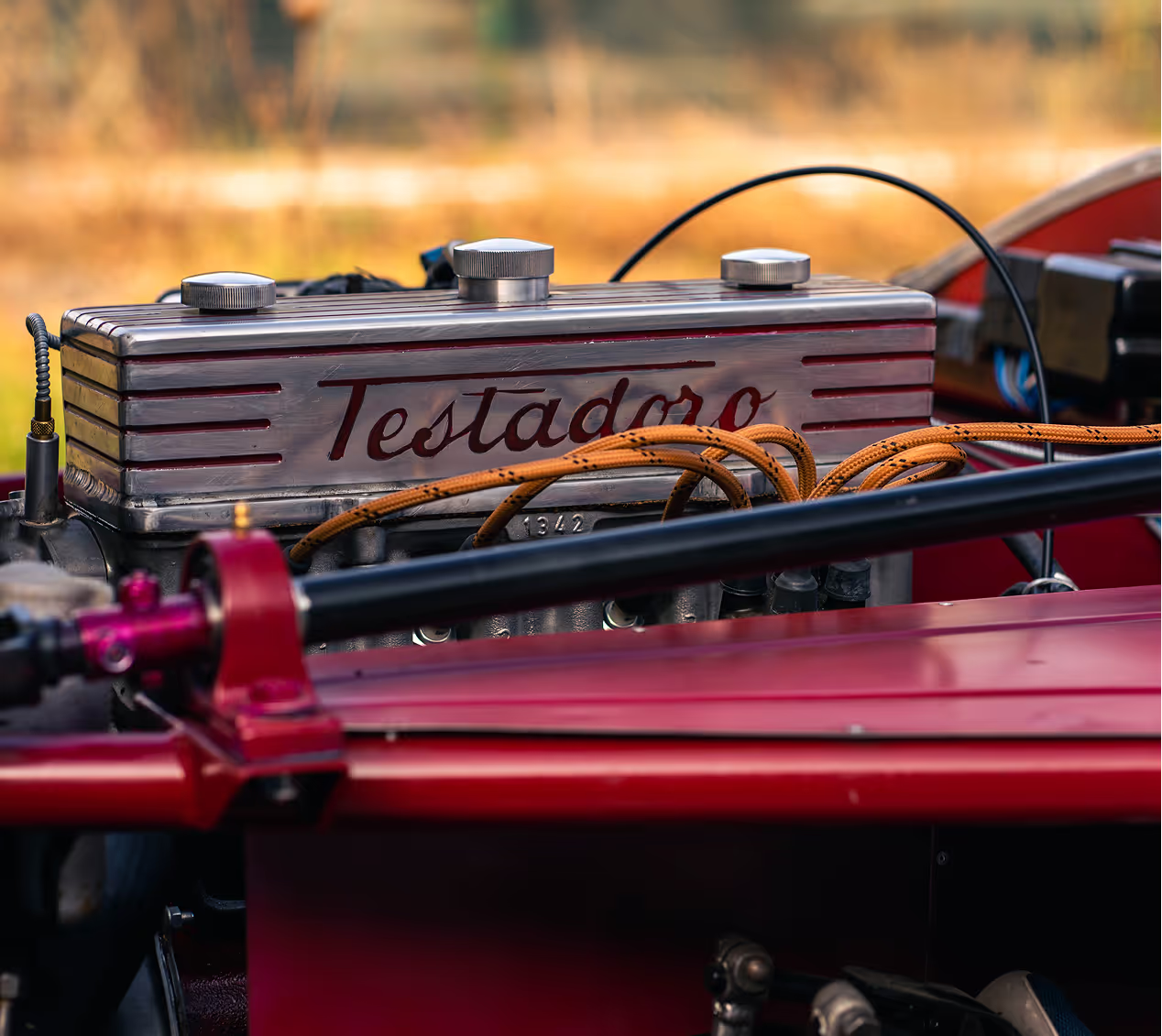
Even before the cars themselves, the Testadoro story began with a mechanical component: the cylinder head designed by Arnaldo Roselli for the Fiat 500 “Topolino” engine. Designed to improve performance and efficiency, it could be installed on the original engine in just a few hours, delivering more power with lower fuel consumption. Its main feature was the overhead valve layout, combined with a hemispherical combustion chamber. Cast in bronze, with a gold-like color, it was initially called “Testa d’Oro” (literal italian for the Golden Head of the engine); that name later inspired the Testadoro brand, registered in Turin in 1946.
The evolution of Testadoro cars
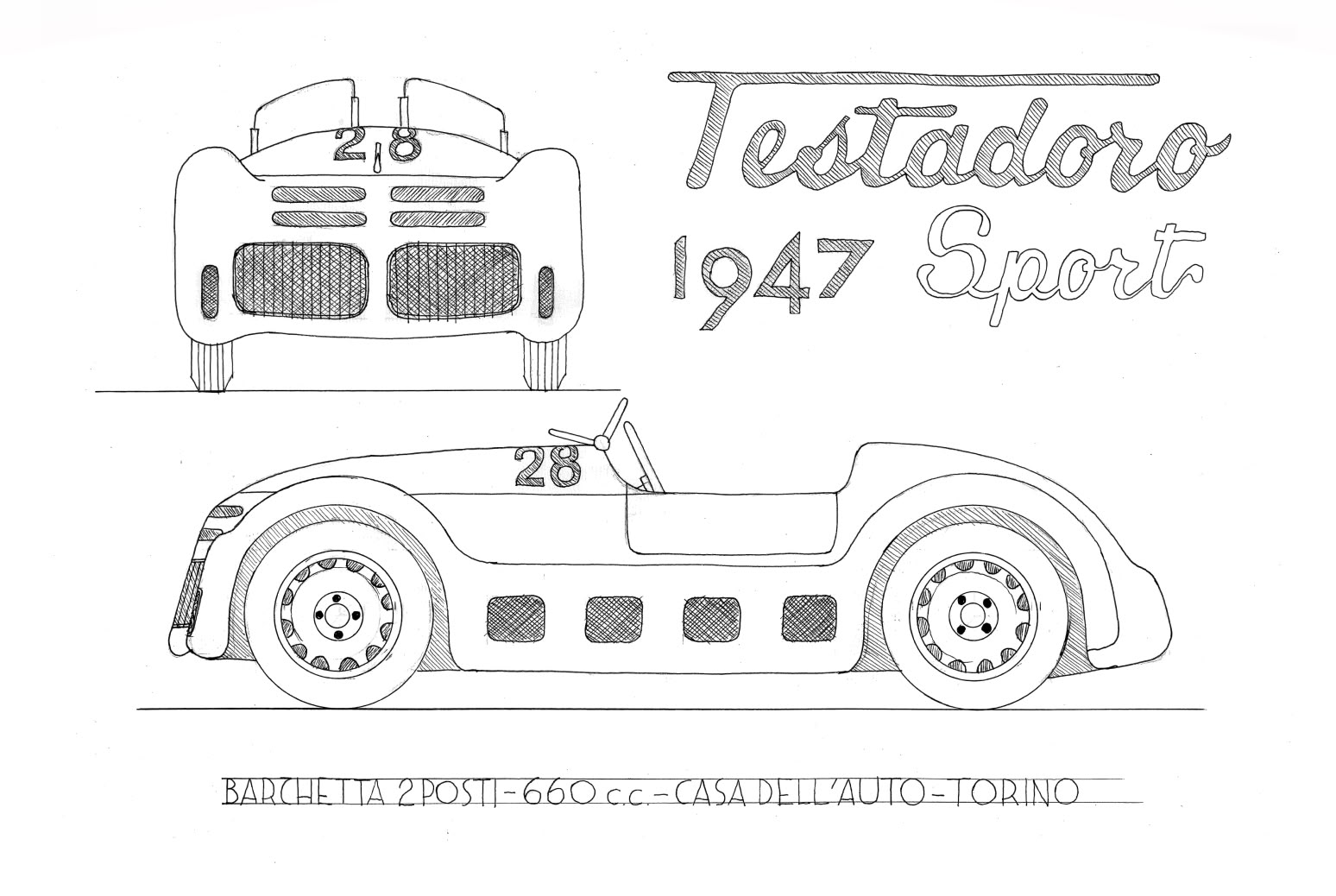
1947 Sport
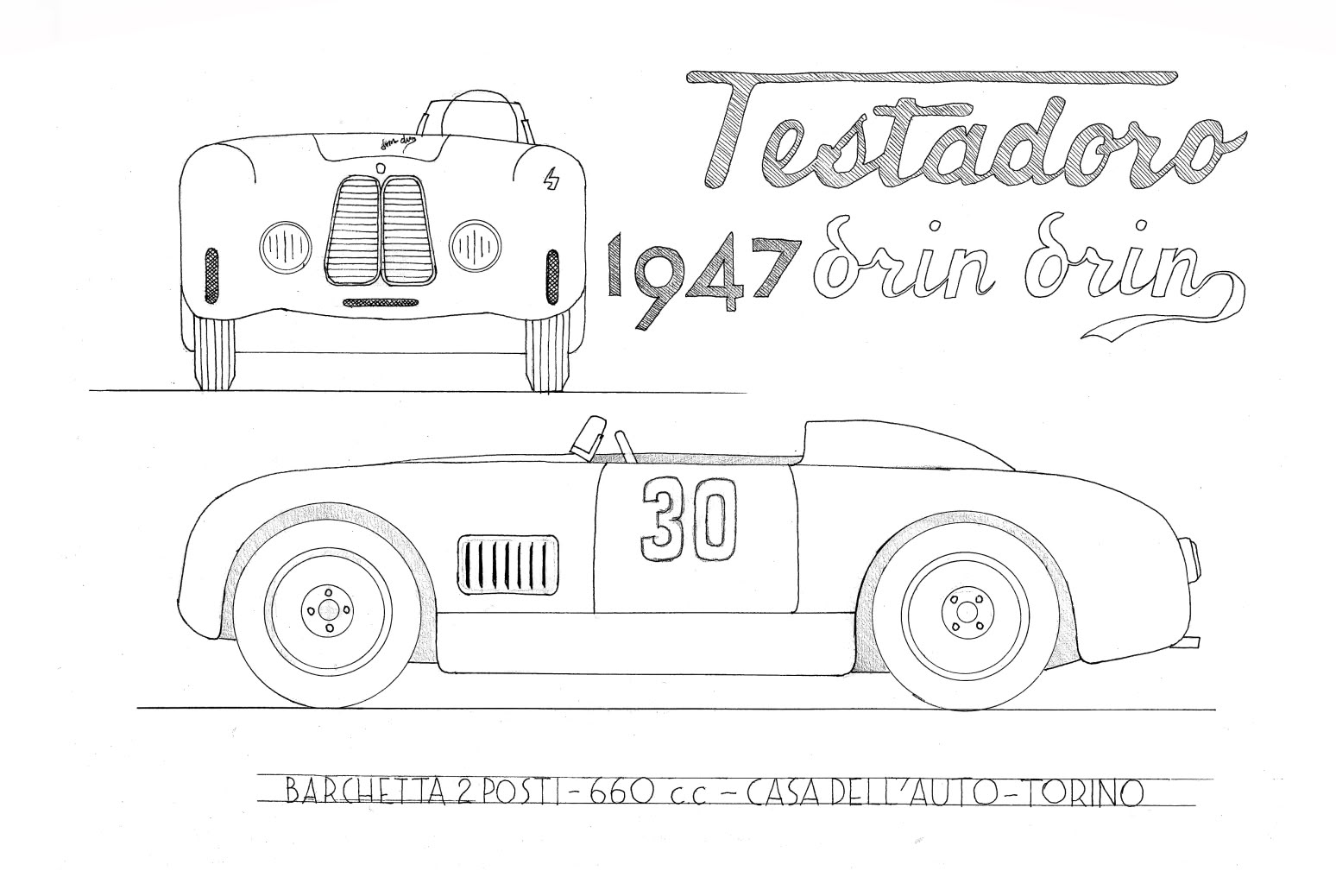
1947 Drin Drin
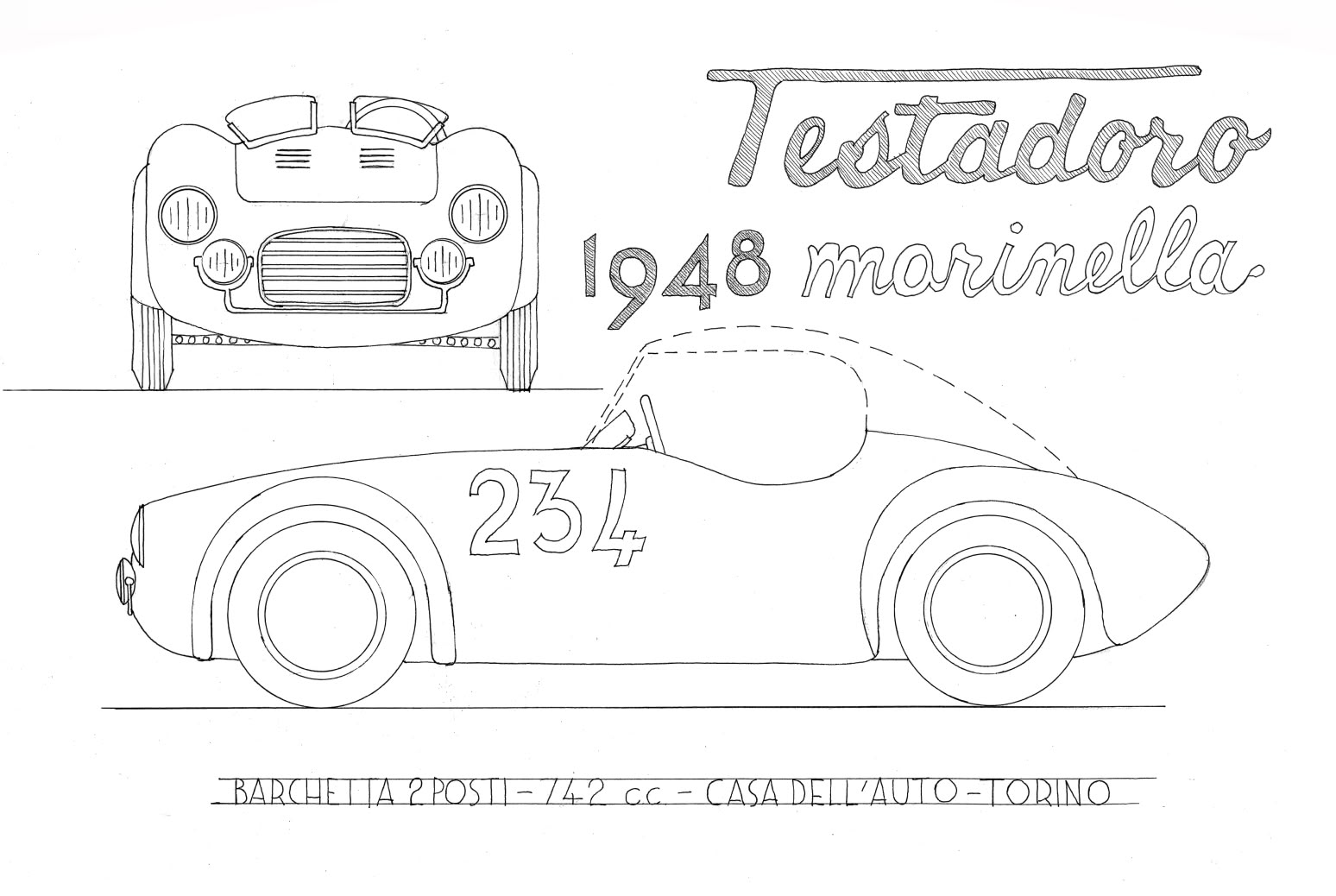
1948 Marinella barchetta
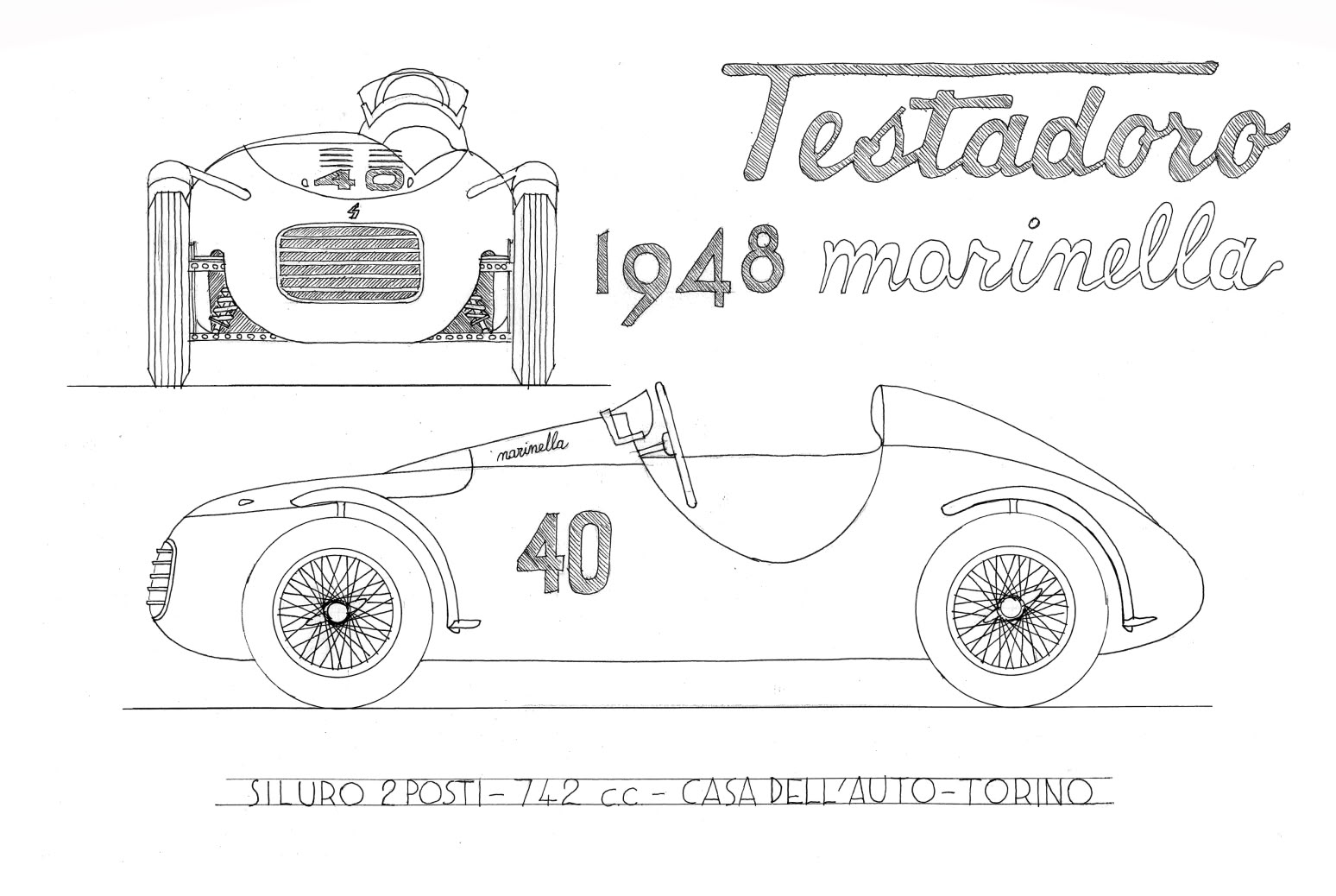
1948 Marinella siluro
1949 Daniela
1951 Barchetta
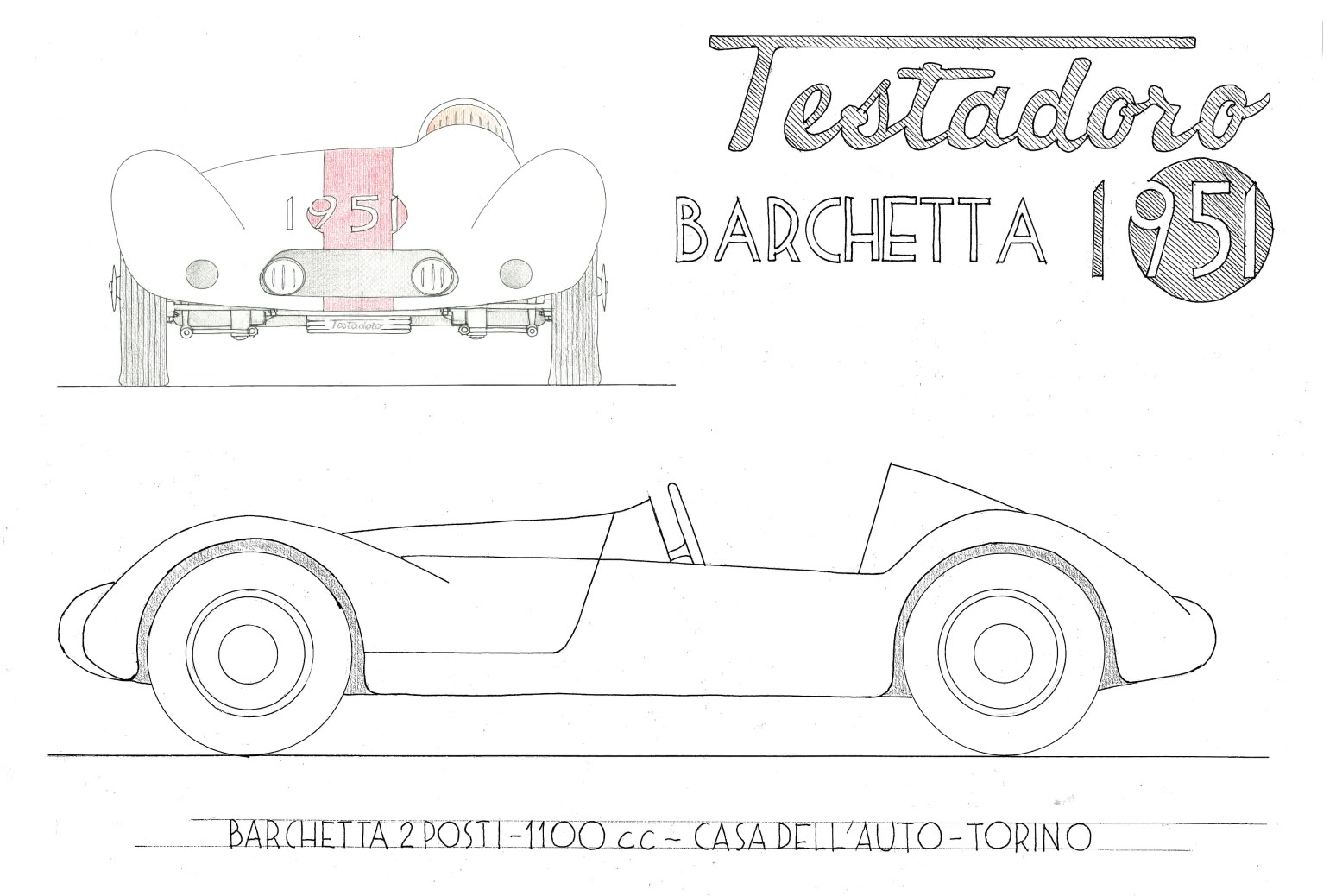
2-seater Barchetta - 1100 cc - Casa dell’auto - Turin
1947
Sport
Drin Drin
1948
Marinella Siluro
Marinella Barchetta
1949
Daniela
1951
Barchetta
1947 Sport
Barchetta
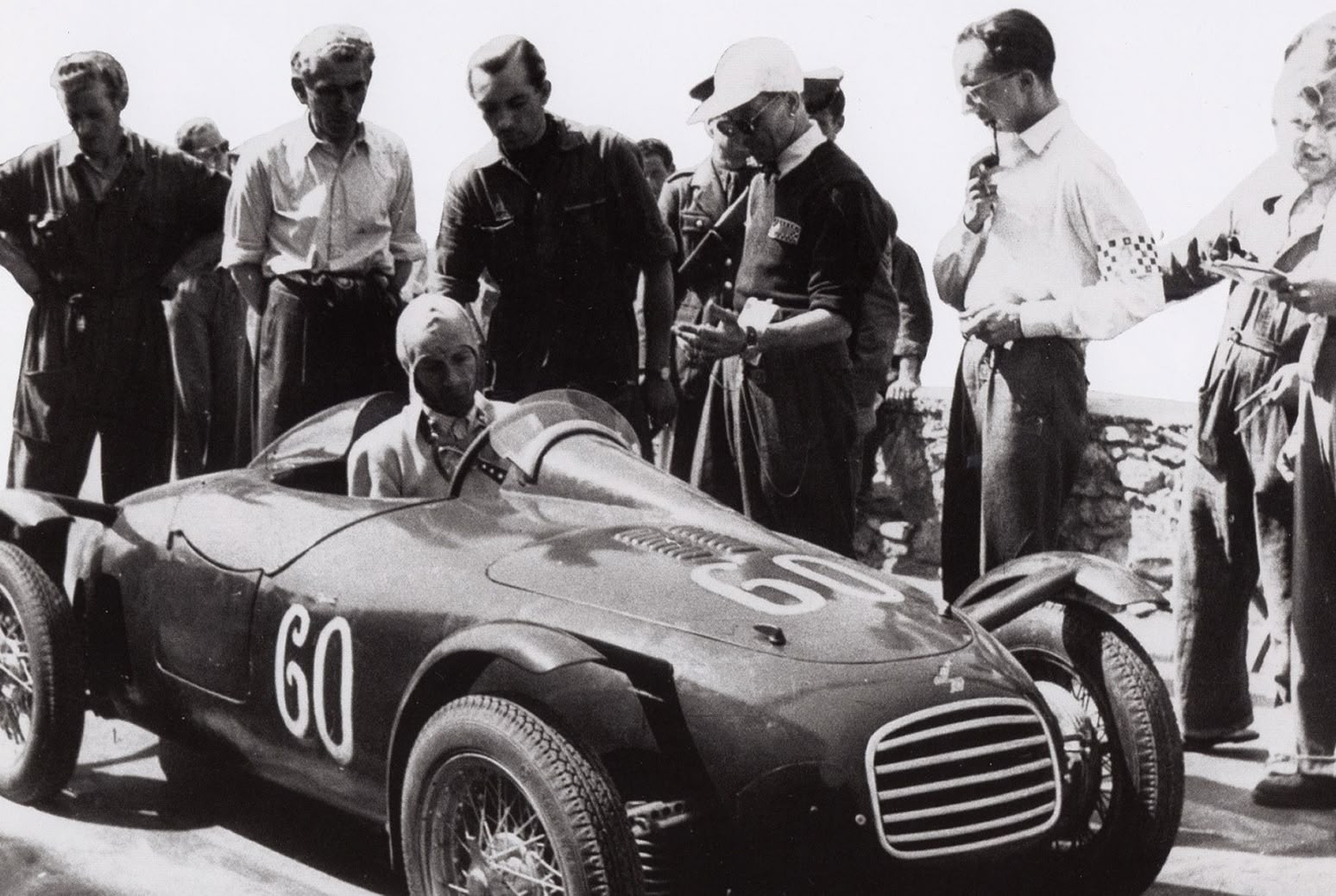
The very first Testadoro, closely derived from the production Fiat 500 "Topolino," from which it retains the original ladder-frame chassis. The engine was increased to 660cc and fitted with the famous "Testadoro" cylinder head with overhead valves and a hemispherical combustion chamber. The highly articulated body design is attributed by some sources to Testadoro's "communications manager," the painter and illustrator Carlo Biscaretti di Ruffia.
Barchetta
2 seater
660 cc
Casa dell'auto
Turin
1947 Drin Drin
Barchetta
The second car produced by Testadoro addressed the stylistic "heaviness" of the "Sport" while simultaneously introducing significant improvements to the production chassis, which was described as "modified" in publications of the time. The "Drin Drin" (the name comes from the nickname of Giorgio Giusti's wife, Andreina) marked the beginning of the collaboration between Testadoro and the Zagato coachbuilders.
Barchetta
2 seater
660 cc
Casa dell'auto
Turin
1948 Marinella Siluro
For the 1948 racing season, Testadoro fielded its first car developed and produced entirely in-house, while simultaneously expanding its collaborations with component manufacturers. Elio Zagato, who had since become an official Testadoro driver, introduced his friend Gilberto Colombo to Giusti; Colombo was the undisputed leader in the development of tubular chassis made from special aeronautical steel. The Marinella (named after Giusti's first daughter) therefore featured a Gilco tubular chassis and a "Siluro" body designed and built by Zagato.
Barchetta
2 seater
742 cc
Casa dell'auto
Turin
1948 Marinella Barchetta
This version of the Marinella was better suited for endurance racing and was also built by Zagato; Elio Zagato himself won the 750 class at the 9th Giro di Sicilia in 1949, together with another official Testadoro driver, Ugo Puma. The car was later equipped with a hard top for a quick conversion into a coupé.
Barchetta
2 seater
742 cc
Casa dell'auto
Turin
1949 Daniela
Siluro
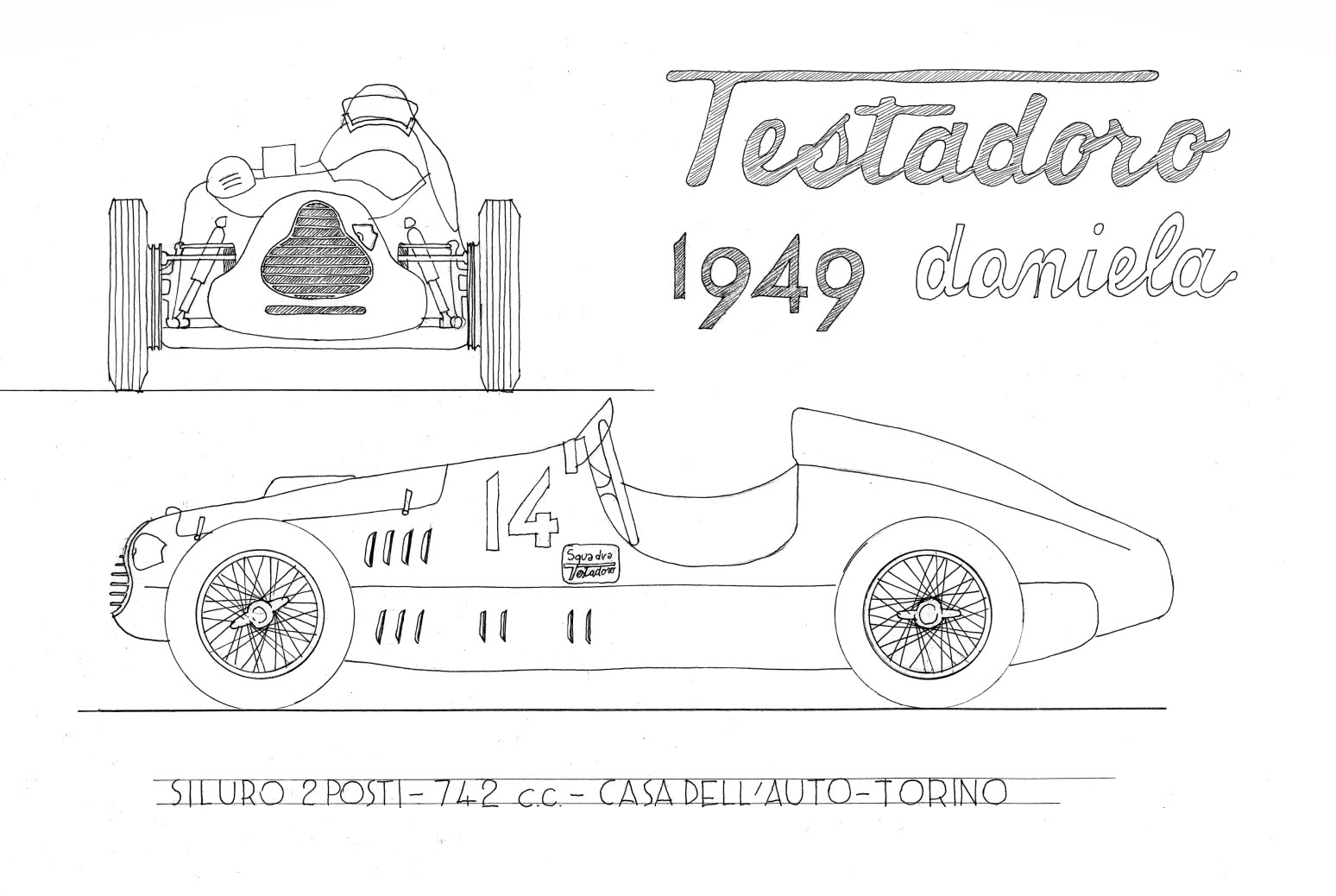
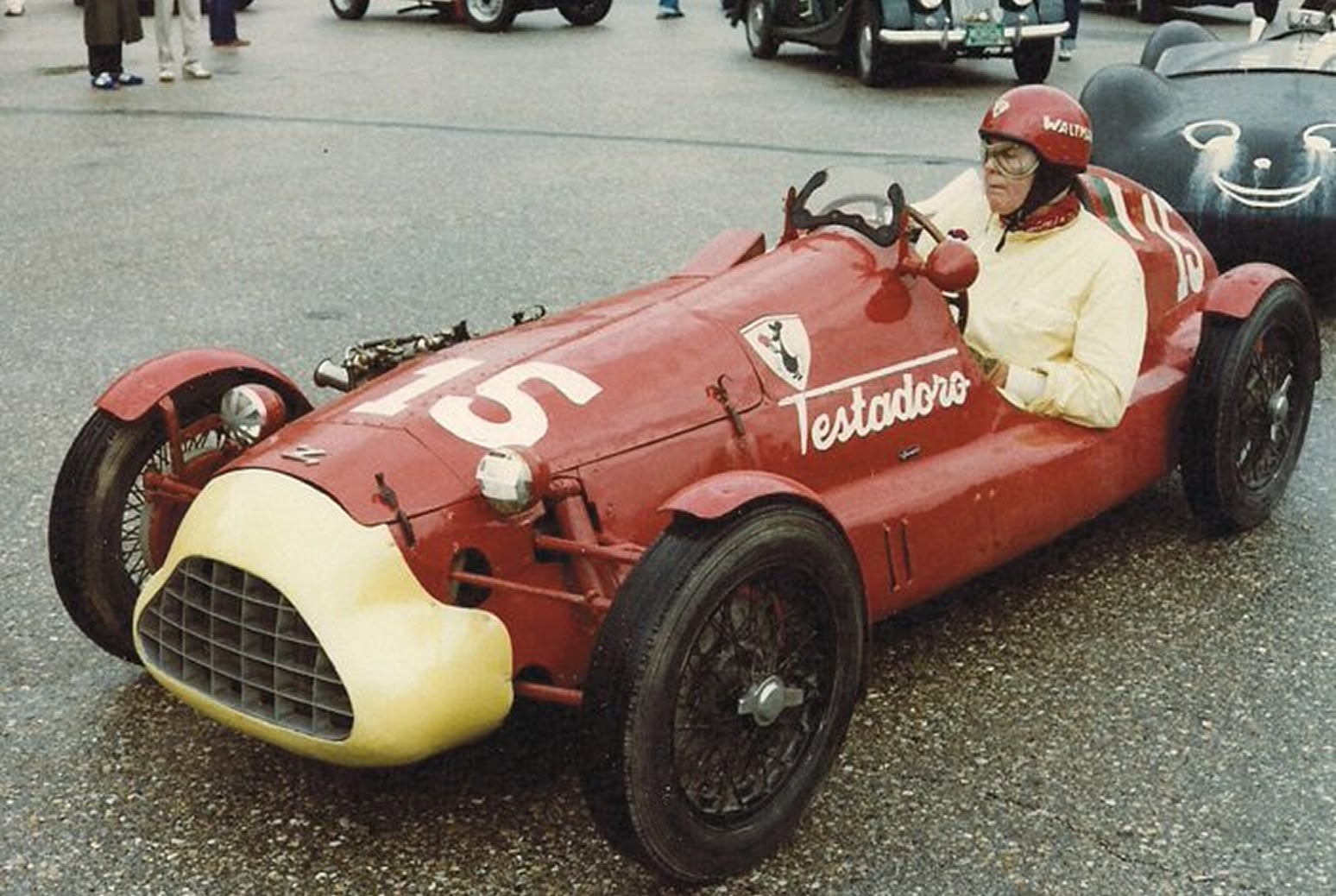
The Daniela (named after Giusti's second daughter) represents the pinnacle of Testadoro's historical production. Inspired by the Alfa Romeo 158 "Alfetta," the dominant Grand Prix car of the era, it features a Gilco "Isorigid" chassis with torsion bar suspension, an engine developed entirely in-house, and "Siluro" bodywork signed by Zagato. The Daniela dominated its class at the 1949 "Gran Premio Vetturette" in Monza, with five cars at the start and a victory by Mejnardi. The most famous Daniela, with a modified front end, was imported to the United States by Tony Pompeo, who raced it until 1958, when he sold it to George E. Waltman, who raced it for years on East Coast circuits.
Barchetta
2 seater
742 cc
Casa dell'auto
Turin
1951 Barchetta
Barchetta
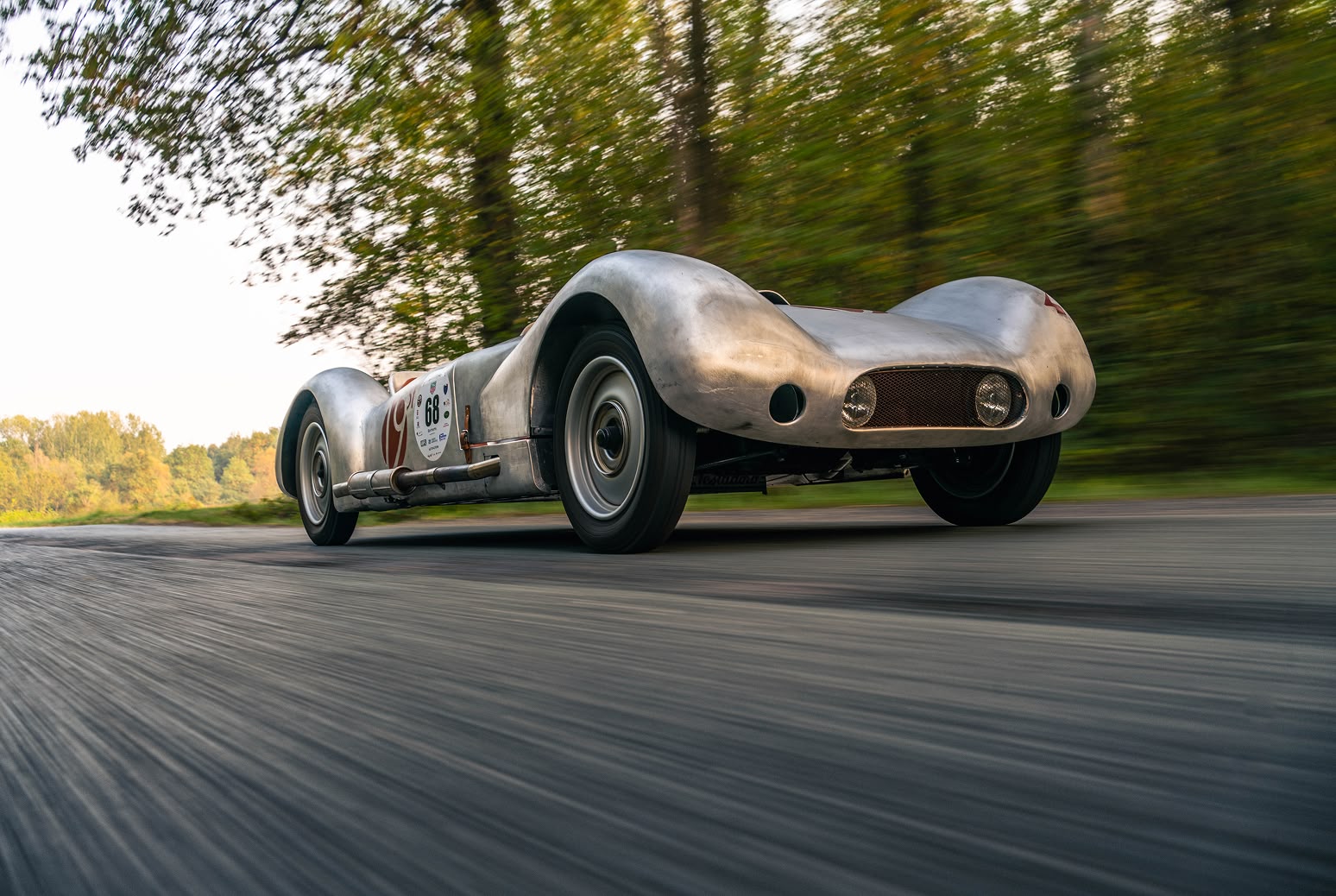
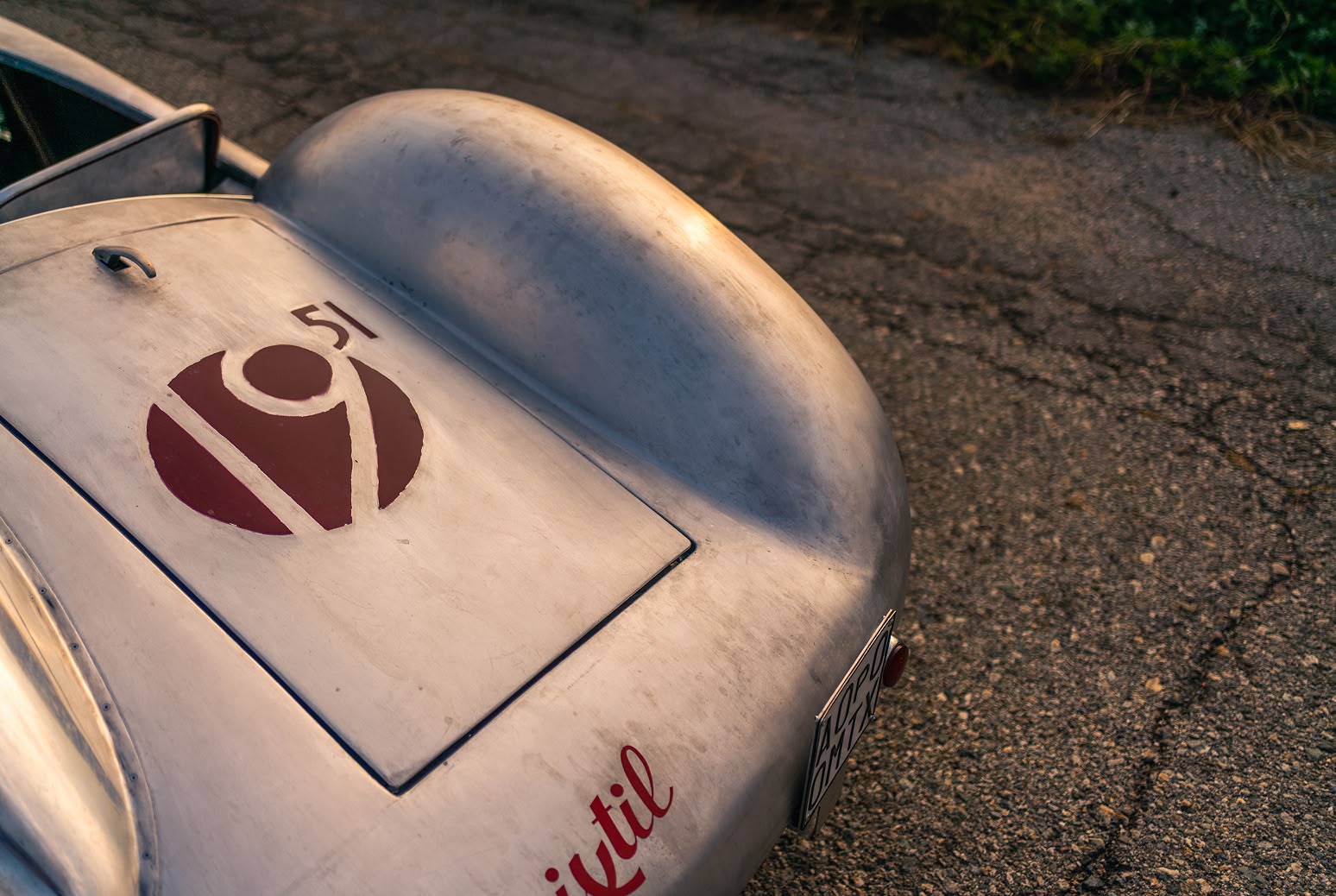
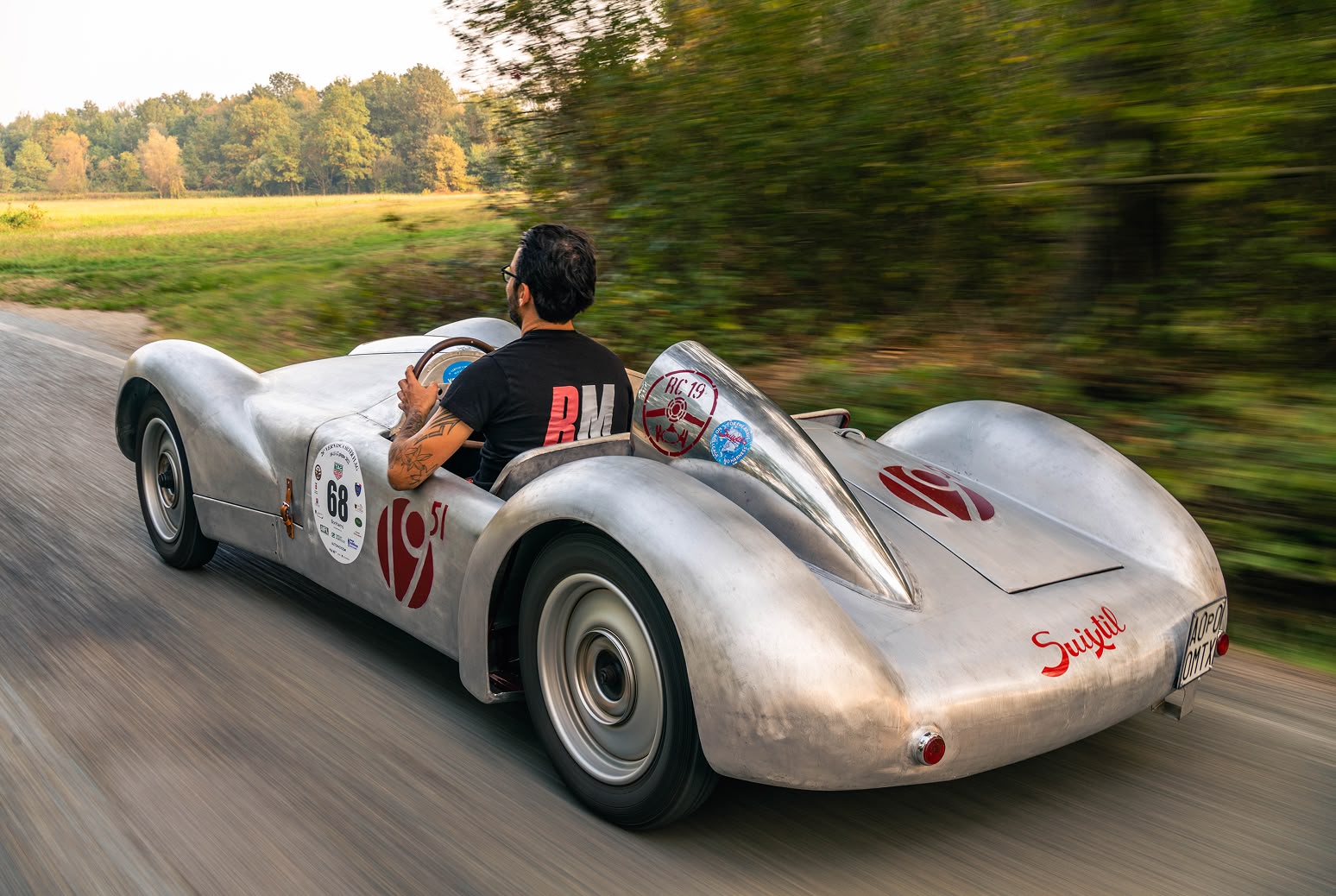
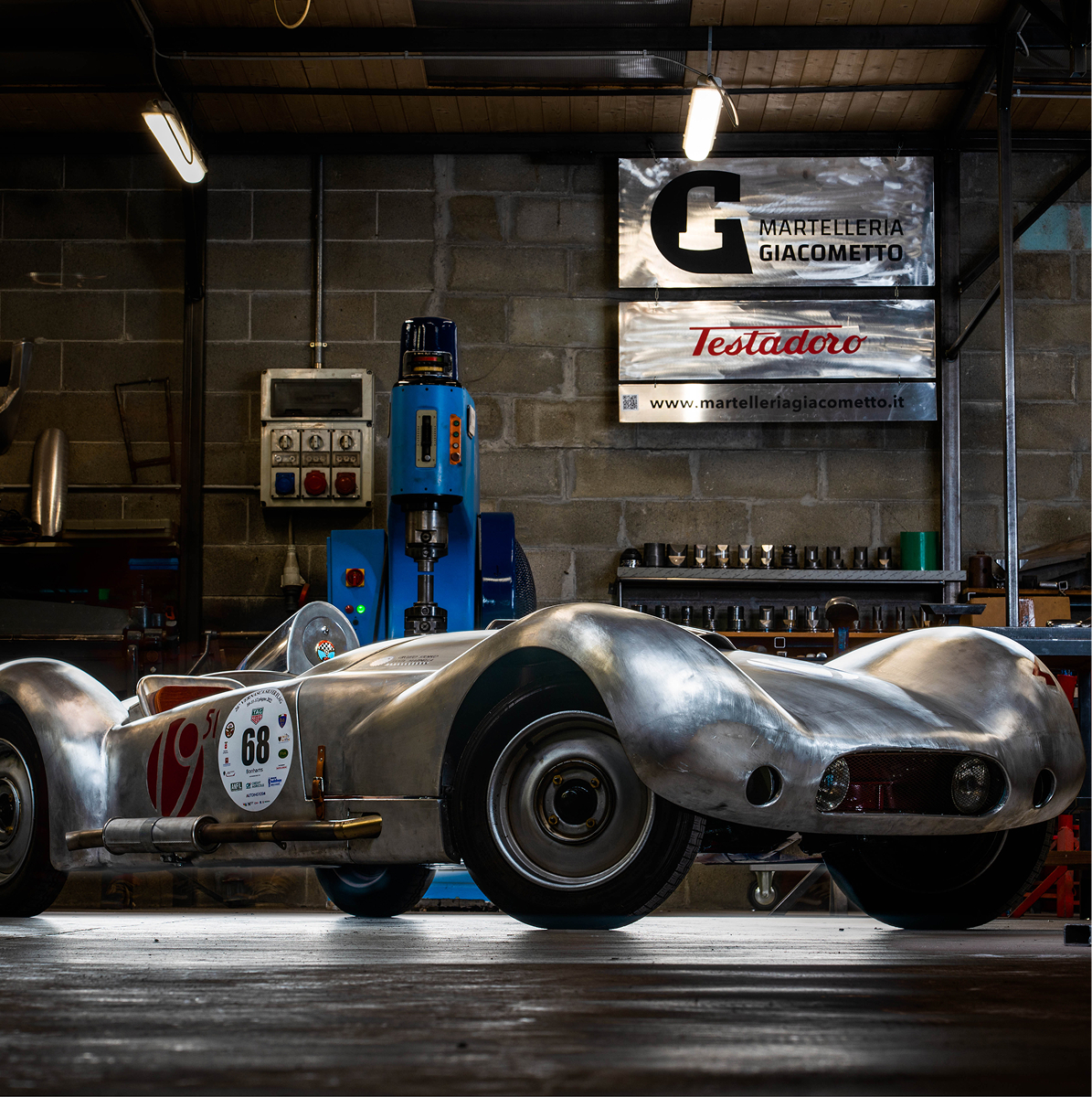
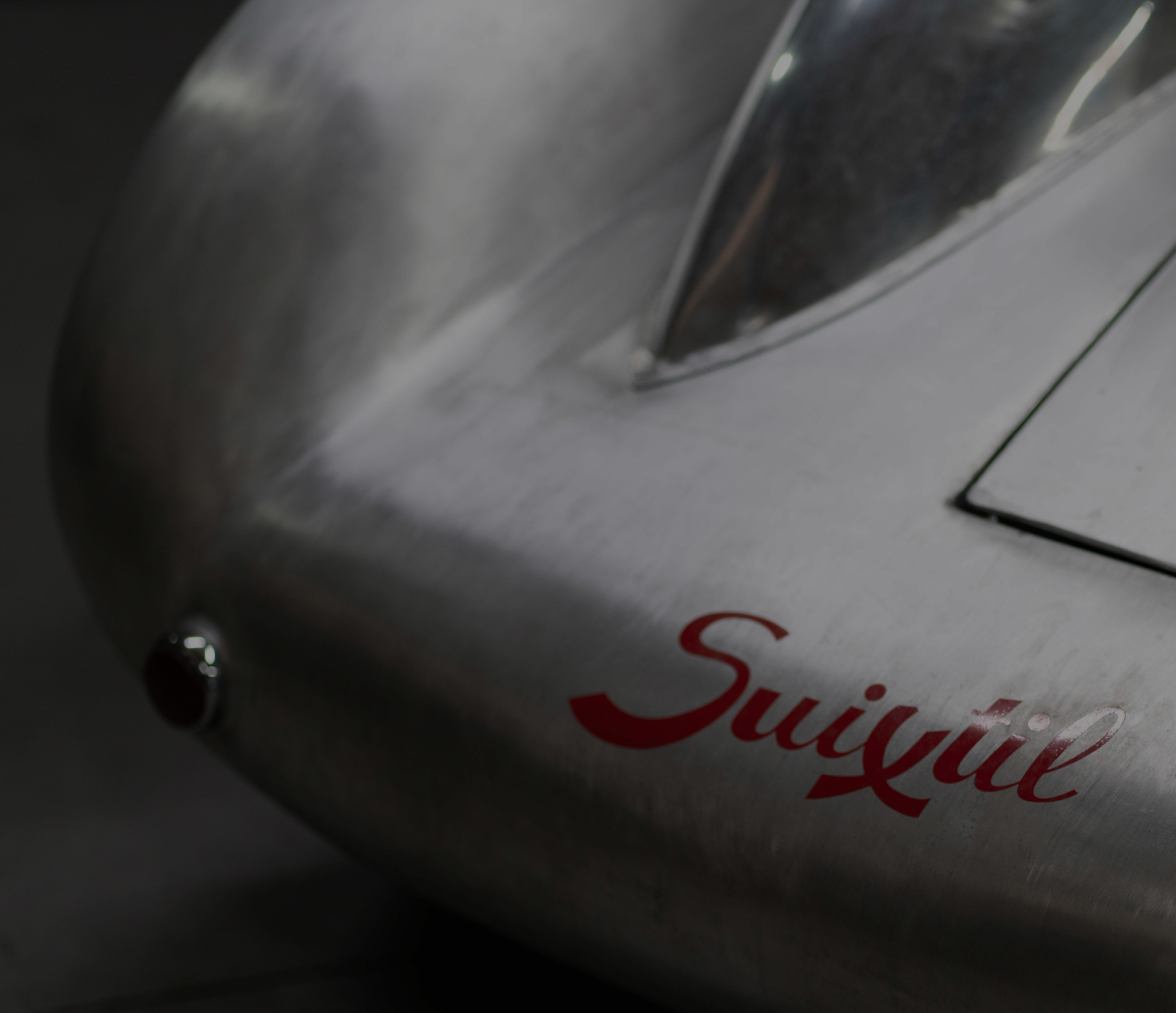
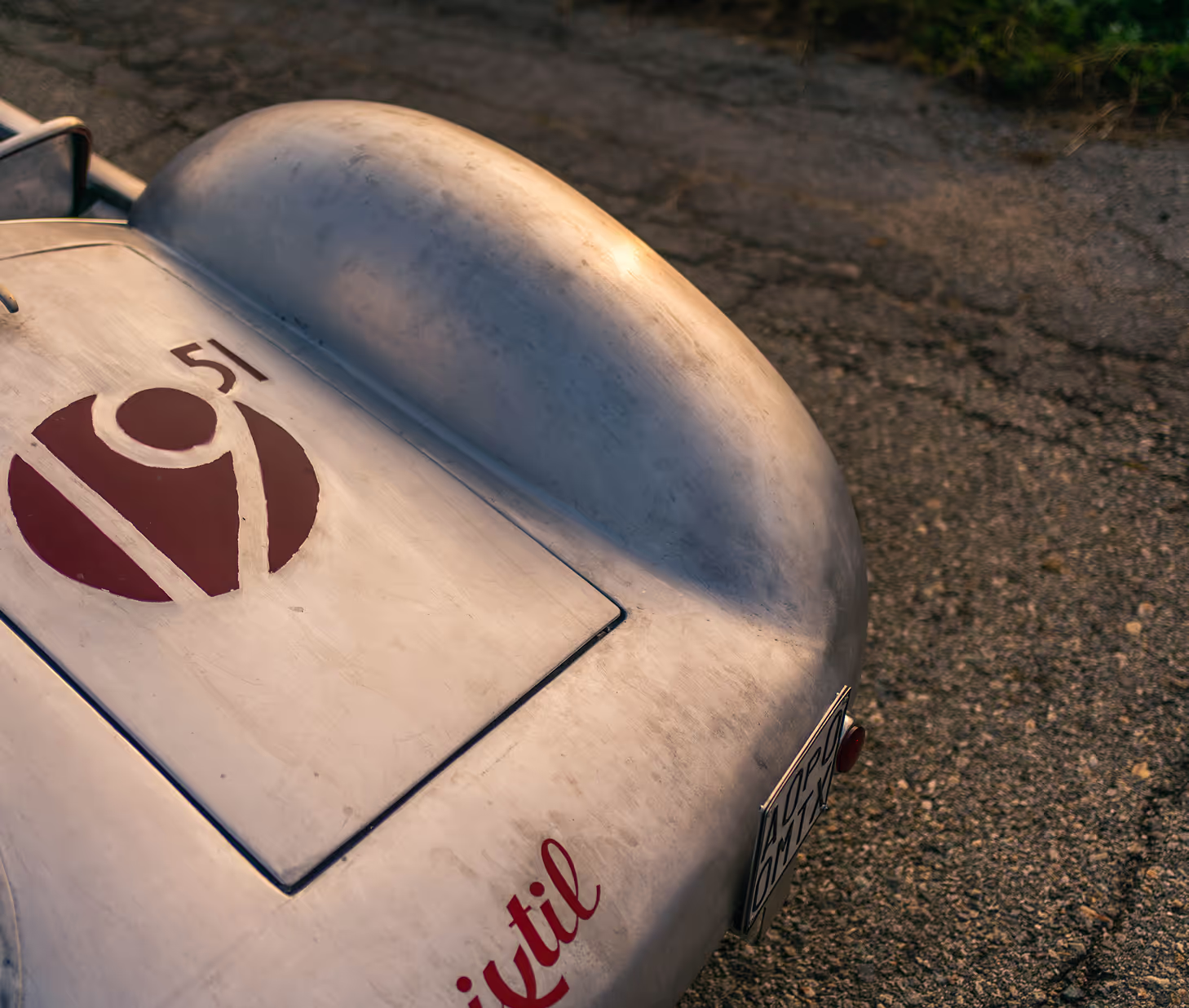
After relaunching the Testadoro brand, Dario Pasqualini came across a project for the 1100 Sport class that had never been built. The tubular trellis frame and the bodywork, designed for maximum aerodynamics and lightness, are typical expressions of Testadoro production. Although there is no record of production plans for this model in official historiography, the design was so compelling that it deserved a second chance: production of a unique model based on the original blueprints began in 2019 and was completed in 2021, exactly 70 years after the original drawings were made.
Barchetta
2 seater
1100 cc
Casa dell'auto
Turin
Past, present, and future.
Testadoro's history lives on through photos and documents. From vintage photographs to new shots, a consistent journey across different generations.